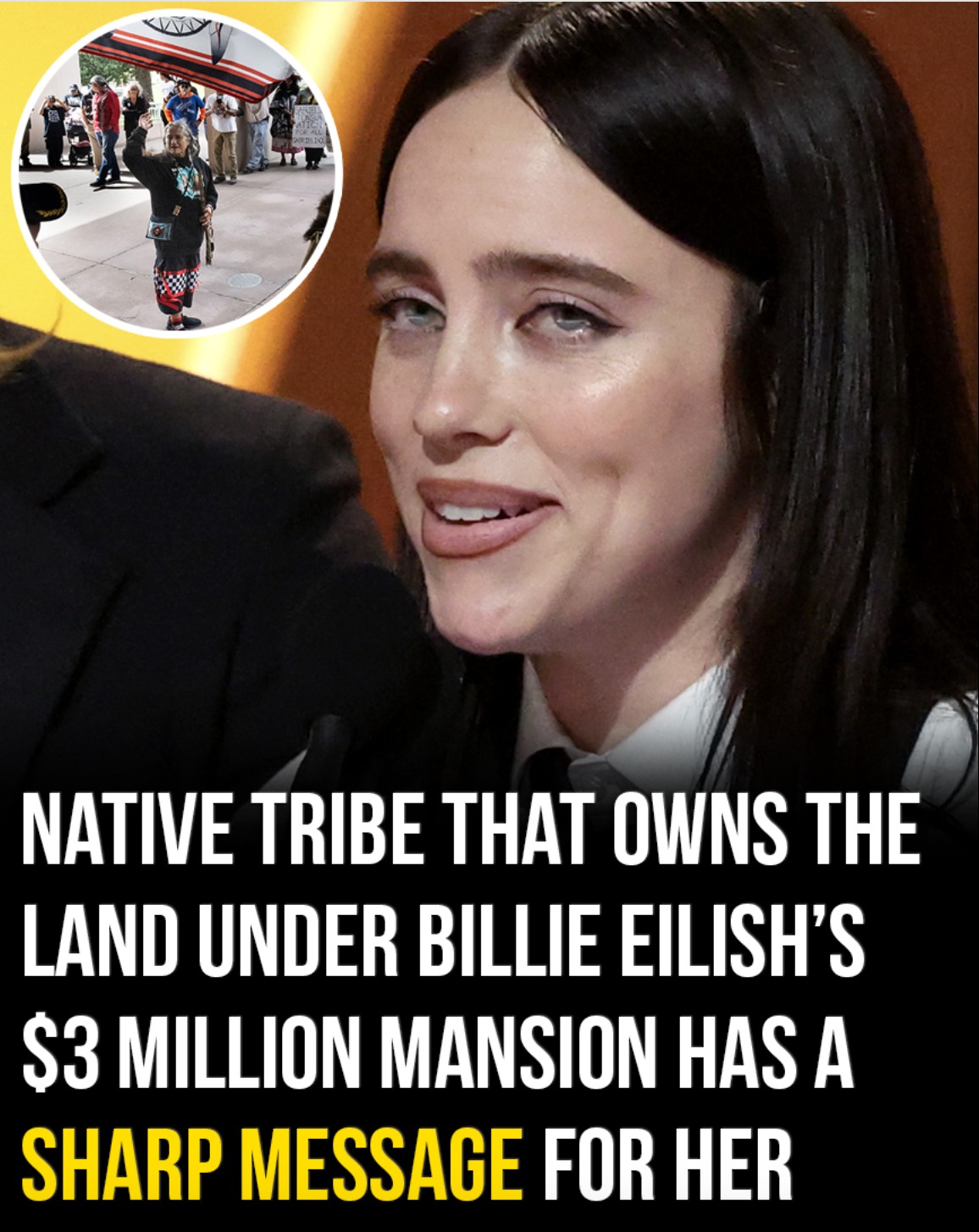
Remarks made by Billie Eilish at the 68th Grammy Awards have continued to spark debate—this time drawing a response from the Native American tribe whose ancestral land includes parts of Los Angeles, where the singer owns a multimillion-dollar home.
Accepting Song of the Year for “Wildflower” on February 1, Eilish said during her speech:
“No one is illegal on stolen land… And f**k ICE.”
The comments referenced European colonization and U.S. immigration enforcement. Supporters praised her for addressing Indigenous history and immigration on a major stage, while critics questioned the consistency of her message given her property ownership.
Los Angeles sits on the ancestral land of the Gabrieleno Tongva people. In a statement to The Daily Mail, a Tongva spokesperson acknowledged Eilish’s remarks and confirmed her home is located on their ancestral land. While noting that Eilish had not contacted the tribe directly, the spokesperson expressed appreciation for public figures who bring visibility to Indigenous history.
The tribe added that it hopes future discussions will explicitly name the Gabrieleno Tongva people, emphasizing that the Los Angeles basin remains their traditional territory. Representatives reportedly reached out to Eilish’s team to share their perspective.
Online reaction intensified following the speech. Some critics argued that if Eilish believes land was stolen, she should return her property or house undocumented migrants. Conservative commentators and politicians—including Sen. Mike Lee, Rep. Walter Hudson, Gov. Ron DeSantis, and Elon Musk—mocked or dismissed the remarks, framing them as symbolic activism disconnected from personal sacrifice.
Eilish has long criticized U.S. Immigration and Customs Enforcement, alleging abusive enforcement practices. Her Grammy comments came amid renewed national debate over immigration policy and ICE operations.
The controversy highlights a familiar tension in American discourse: celebrity activism intersecting with historical accountability, property ownership, and immigration reform. While supporters see Eilish’s remarks as spotlighting systemic injustice, critics view them as rhetorically bold but practically hollow.
The Tongva tribe’s response added nuance—affirming the historical truth of Indigenous land while calling for clearer acknowledgment rather than symbolic gestures alone.
Eilish has not publicly expanded on her remarks since the ceremony.