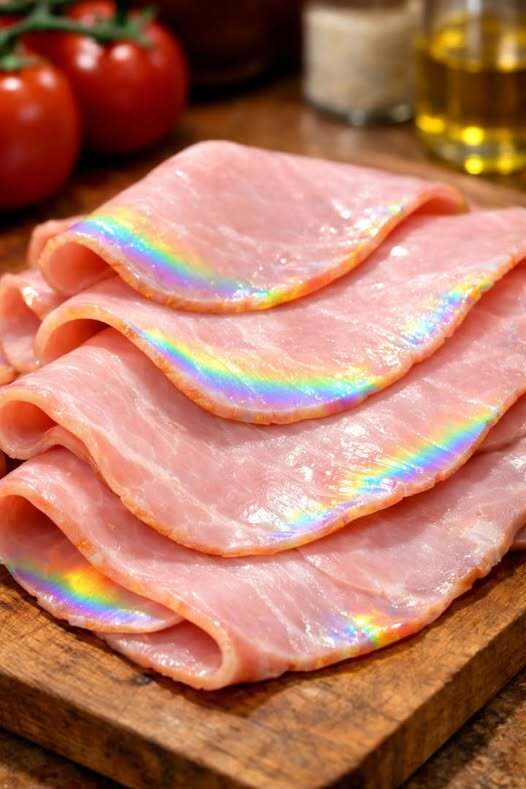
You open a fresh pack of deli ham and see it: a metallic rainbow of green, purple, and blue shimmering across the surface. It looks alarming, but in most cases, it’s completely harmless.
This effect is called iridescence, and it’s a matter of physics, not spoilage. Ham is made of tightly packed muscle fibers arranged in parallel. When the meat is sliced thinly, those fibers create a microscopic ridged surface. Light hitting that moist surface is split into different wavelengths—much like a CD or soap bubble—producing the rainbow sheen. Curing salts help retain moisture, which can make the effect even more visible. The color shifts as the light moves, confirming it’s an optical illusion, not contamination.
That said, a rainbow shine doesn’t guarantee the meat is safe. True spoilage shows up in other ways. Fresh ham should feel firm and slightly damp; a sticky or slimy coating is a clear sign of bacterial growth. Smell matters even more—sour, ammonia-like, or sulfur odors mean the meat should be thrown out, even if it looks fine.
Color changes can also signal trouble when they’re permanent rather than reflective. Dull gray, brown tones, or fuzzy mold indicate oxidation or decay, not harmless iridescence.
Time is the final factor. Once opened, deli meat should be eaten within three to five days, regardless of how it looks or smells. Some bacteria, including Listeria, can grow in the refrigerator without obvious warning signs.
In short, the rainbow glow on ham is usually just light interacting with muscle fibers. But always trust texture, smell, and storage time over appearance. When in doubt, throw it out—no sandwich is worth the risk.