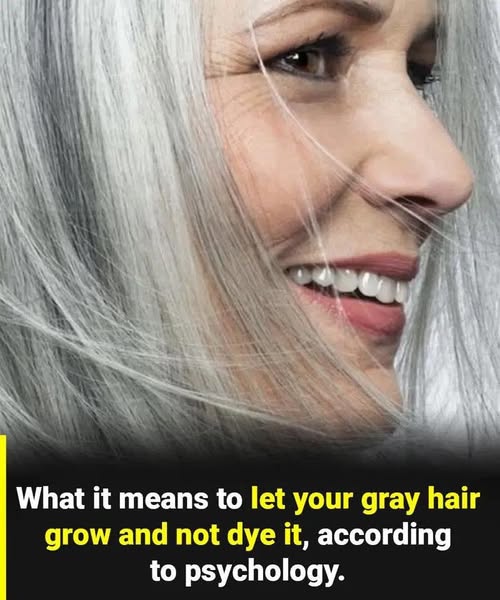
Leaving gray hair uncovered has become increasingly common, and psychologists often see it as a sign of emotional maturity and identity alignment. For decades, gray hair was framed as decline, reinforcing the belief that youth determined value and encouraging people to hide signs of aging to remain acceptable.
That narrative is shifting. Gray hair is now more often associated with confidence and authenticity rather than loss. Psychologically, the decision to stop dyeing hair reflects an internal change more than an aesthetic one. Hair is a visible part of identity, and allowing it to change naturally often reveals that discomfort stems less from appearance and more from fear of judgment or invisibility.
Many psychologists describe this choice as self-affirmation—a move away from external validation and toward autonomy and acceptance. For women, who have historically faced stronger pressure to conceal aging, it can feel especially liberating. For men, it can signal confidence and a separation of self-worth from productivity or youth.
Ultimately, embracing gray hair reflects emotional freedom: a healthier relationship with time, reduced shame around aging, and a deeper sense of authenticity that no longer depends on staying unchanged.