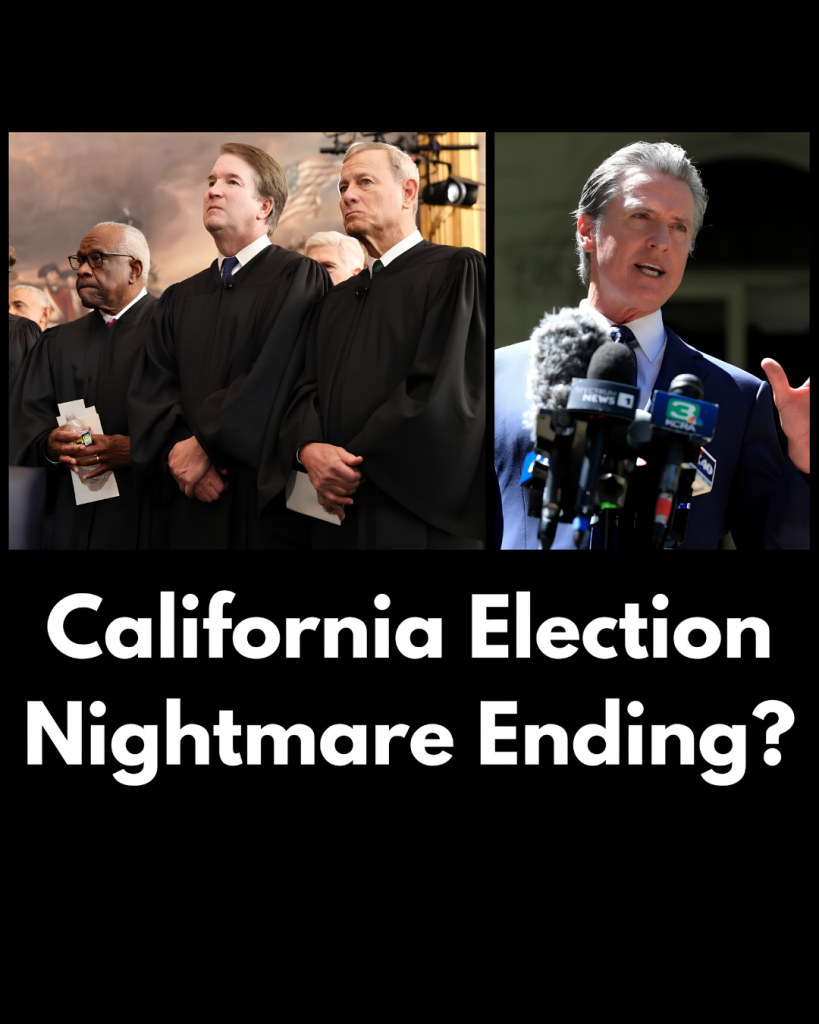

A major election-law case now before the U.S. Supreme Court could reshape how mail ballots are counted across the country, including in California and more than a dozen other states.
The case, Watson v. Republican National Committee, focuses on whether states can count mail ballots that arrive after Election Day as long as they were mailed on or before Election Day.
Mississippi’s law currently allows absentee ballots to be counted if they are postmarked by Election Day and received within five business days afterward. Republican challengers argue that federal law establishes a single national Election Day, meaning ballots must be received by that date to count in federal elections.
Mississippi officials, however, argue that states have broad authority over election administration and that ballots cast on time should remain valid even if postal delays occur.
The dispute began after Mississippi adopted a five-day grace period for absentee ballots during the COVID-19 pandemic. A federal district court upheld the law, but the Fifth Circuit Court of Appeals later ruled that federal election law overrides the state’s deadline extension.
The Supreme Court heard arguments in March and is expected to issue a ruling before the end of June.
The decision could have nationwide consequences. Around 15 states and Washington, D.C., currently allow some ballots to arrive after Election Day if they were mailed by then. California, for example, accepts ballots received up to seven days after Election Day if postmarked on time.
Supporters of stricter deadlines argue that requiring ballots to arrive by Election Day would create a clearer national standard and reduce extended vote counting periods. Critics warn that such a ruling could disenfranchise voters whose ballots are delayed in the mail despite being sent on time.
Court observers noted that several justices focused heavily on the meaning of federal laws establishing a single Election Day during oral arguments, though the Court’s final decision remains uncertain.
The ruling could become one of the most significant election-law decisions in recent years, potentially forcing states to revise ballot deadlines nationwide ahead of future federal elections.