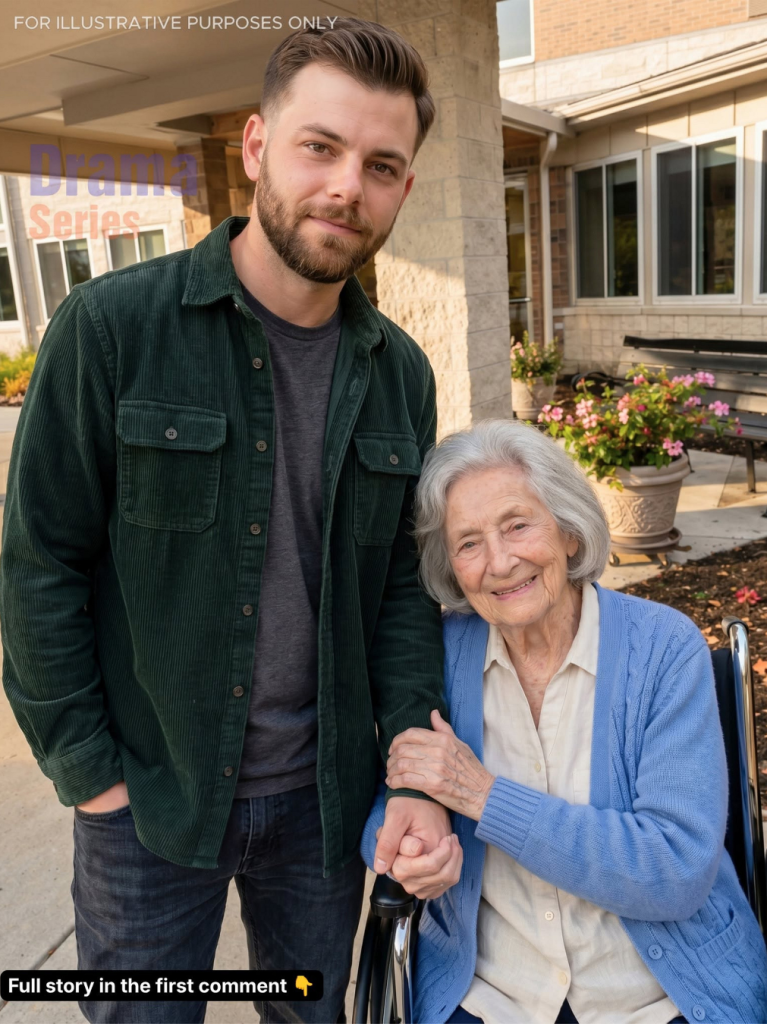

The Woman Who Knew I Wasn’t Her Son
The dashboard clock blinked 11:47 p.m. as Jeremy parked his delivery van outside his mother’s apartment building. Rain streaked across the windshield, turning the streetlights into blurry gold smears.
He stayed in the van for a moment, mentally sorting numbers that never seemed to work anymore. Rent. Utilities. Medication. Every calculation ended the same way: not enough.
Finally, he grabbed a grocery bag and a small paper pharmacy sack before climbing the three flights of stairs.
His mother opened the door before he could knock.
“You shouldn’t be out this late,” she said softly.
“I’m okay, Ma. I brought your pills and that soup you like.”
She cupped his face in her warm hands and studied him carefully.
“You look exhausted, Jeremy.”
“I’m fine.”
But he wasn’t.
The next morning, between shifts, Jeremy picked up extra work delivering coffee orders downtown. During a break, a sharply dressed man sat across from him without asking permission.
“You’re Jeremy, right?” the man asked. “I heard you might need extra money.”
Jeremy frowned. “Who told you that?”
The man ignored the question.
“My mother lives in a nursing home. Dementia. Some days she tells everyone her son abandoned her.” He paused briefly. “I need someone to visit her.”
Jeremy stared at him. “Then visit her yourself.”
For a second, the man’s composure slipped.
“I can’t watch her like that anymore.”
He slid a folded stack of cash across the table.
“Five hundred dollars a week. Weekends only. Pretend to be her son. Call her Mama. My name is Tim. She won’t know the difference.”
Jeremy didn’t touch the money.
“That’s wrong.”
The man leaned back calmly.
“Wrong doesn’t pay hospital bills.”
The words landed exactly where they were meant to.
Jeremy hesitated. He thought about his mother’s prescriptions sitting unpaid on the kitchen counter.
“When do I start?” he finally asked.
The man gave a small nod.
“Saturday. And don’t get attached.”
The nursing home smelled faintly of disinfectant and wilted flowers.
Room 214.
Jeremy knocked softly before stepping inside.
An elderly woman sat near the window with a blanket across her lap. Her silver hair glowed in the afternoon light.
“Mama,” Jeremy said awkwardly. “It’s me. Tim.”
She looked at him quietly for several seconds.
Then her face softened.
“There you are,” she whispered.
She reached for his hand, and guilt hit him so suddenly it made his chest ache.
Jeremy sat beside her while she talked about gardens, old neighbors, and memories that belonged to another family entirely. He listened anyway.
When he stood to leave, Rosie squeezed his hand tightly.
“Come back soon.”
“I will.”
And somehow, he meant it.
The visits became routine.
Jeremy brought tulips one weekend, chocolates the next. Soon he started showing up on Wednesdays too, even though Tim only paid for weekends.
One afternoon, another resident named Margaret stopped him in the hallway.
“You visit her often,” she observed.
“She’s my mother,” Jeremy answered automatically.
Margaret smiled gently.
“Then you’re lucky.”
Something about the way she said it made Jeremy look away.
Weeks turned into months.
He read newspapers aloud to Rosie. He rubbed lotion into her aching hands. Sometimes she forgot what year it was. Sometimes she forgot where she was entirely.
But whenever he walked into the room, her face brightened.
One afternoon, Rosie looked at him with unusual clarity.
“You’re a good man, son.”
Jeremy nearly broke.
“Mama, I—”
“Shhh,” she whispered, patting his cheek. “I know what I know.”
At the time, he assumed the dementia was speaking.
He would later realize she meant every word.
Two days later, Jeremy received a phone call while unloading deliveries.
Rosie had passed away peacefully in her sleep.
The funeral was small.
Afterward, the nursing home director asked Jeremy to stay behind.
“She left something for you,” the director said.
Jeremy sat silently while the woman slid an envelope across the desk.
Then she added quietly, “Rosie knew you weren’t her son.”
Jeremy looked up in shock.
“She figured it out during your first week here,” the director explained. “But she asked us not to say anything.”
His hands trembled as he unfolded the letter.
My dear boy who is not my boy,
My memory failed me, but my heart did not.
I knew you were not my son. I let you stay because you stayed when you did not have to.
That mattered more than blood ever could.
The key inside opens what I have left behind. Use half for the people here. They are lonely too.
A small brass key slipped from the envelope into Jeremy’s palm.
He stared at it silently.
“She wanted you to have it,” the director said.
Word spread quickly.
Four days later, Tim appeared at Jeremy’s apartment furious and demanding the key.
“She was my mother,” Tim snapped. “You manipulated her.”
Jeremy met his gaze evenly.
“No. She knew the truth.”
Tim’s face hardened.
Within a week, legal papers arrived.
Tim contested Rosie’s will, accusing Jeremy of exploiting a vulnerable elderly woman for money.
Relatives Jeremy had never met called him a scam artist and a thief.
For a moment, he considered walking away from everything.
But his mother looked at him quietly from her couch and said, “You have the truth. Don’t surrender that.”
The courtroom felt colder than Jeremy expected.
Tim testified first, painting Jeremy as a con man who preyed on a sick woman.
Then Jeremy’s attorney presented the payment records.
Weekly transfers. Five hundred dollars each.
Messages proving Tim had hired Jeremy to pretend to be him.
The room went silent.
“When was the last time you visited your mother yourself?” the attorney asked.
Tim hesitated.
“I couldn’t do it,” he admitted quietly. “She didn’t feel like my mother anymore.”
For the first time, Jeremy almost pitied him.
Margaret testified next.
“Rosie called Jeremy the boy who chose to stay,” she told the judge. “She knew exactly who he was.”
Finally, Jeremy took the stand himself.
“I accepted the money because my mother was sick and I was desperate,” he said honestly. “But after a while, I stopped going there for the money.”
The judge read Rosie’s letter carefully before delivering her decision.
“The bequest stands.”
Inside the safety deposit box were savings bonds, cash, and a single photograph of Rosie holding a baby many years earlier.
Jeremy cried the moment he saw it.
He honored her final request exactly as she asked.
Half the money went toward improving life at the nursing home — better meals, outings, books, and supplies for residents who rarely received visitors.
The other half allowed Jeremy to finally pay off his mother’s medical debt.
For the first time in years, he slept peacefully.
But every Saturday, he still drove back to the nursing home.
Margaret always saved him Rosie’s favorite chair by the window.
One afternoon, Jeremy placed fresh tulips across the empty seat.
Margaret watched quietly.
After a long silence, Jeremy smiled softly and said, “She taught me how to stay.”
Sunlight drifted across the flowers while the room sat peacefully still.