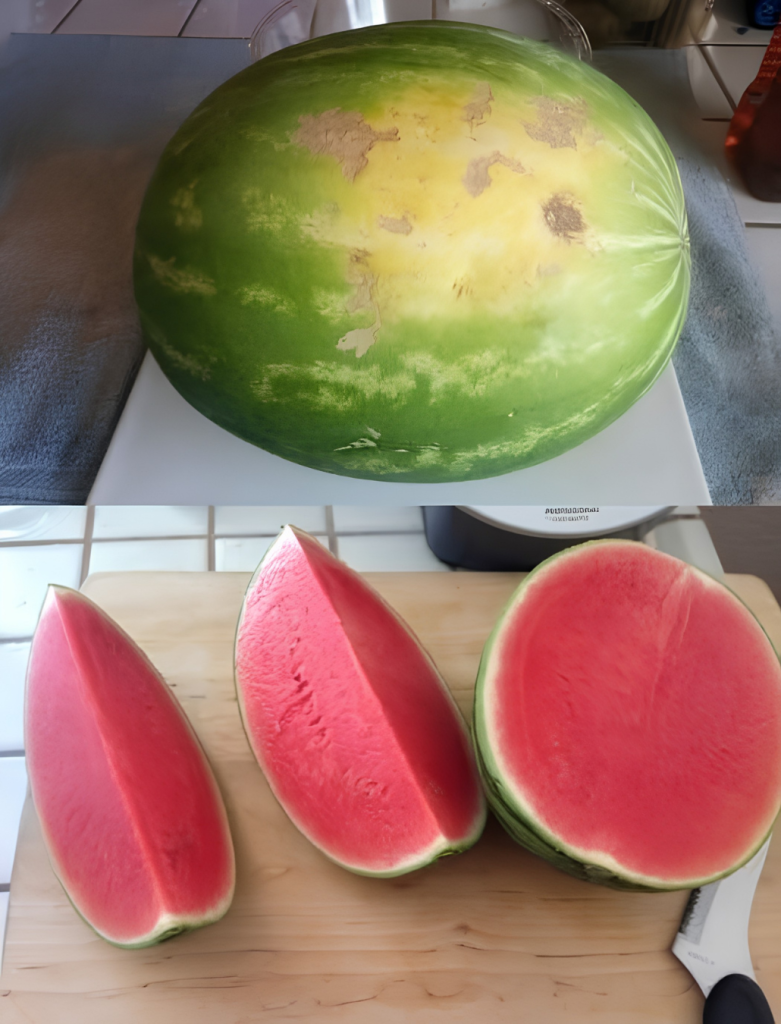

Choosing Better Fruit Without the Guesswork
Buying fruit can feel unpredictable. Sometimes the best-looking produce turns out bland or dry once you get home. While no method guarantees perfect fruit every time, paying attention to a few simple details can improve your chances.
For watermelon, many shoppers check the field spot — the area where the melon rested on the ground. A creamy yellow spot may suggest it ripened longer on the vine, while a pale spot can indicate earlier harvesting. Dry brown stems and rough web-like markings are also often viewed as good signs.
With pineapple, color alone is not enough. A ripe pineapple should feel firm with slight softness and have a sweet smell near the base. Many people also gently pull a center leaf; if it comes out with slight resistance, the fruit may be ready.
Cantaloupe offers clues through color, weight, and scent. A tan or beige rind is often preferred over one with large green patches. Heavier melons may contain more moisture, and a ripe cantaloupe usually has a light, sweet aroma.
There is no perfect formula for choosing fruit, but slowing down and noticing details like scent, texture, color, and weight can often lead to better choices and less waste.
Sometimes a little extra attention is all it takes.