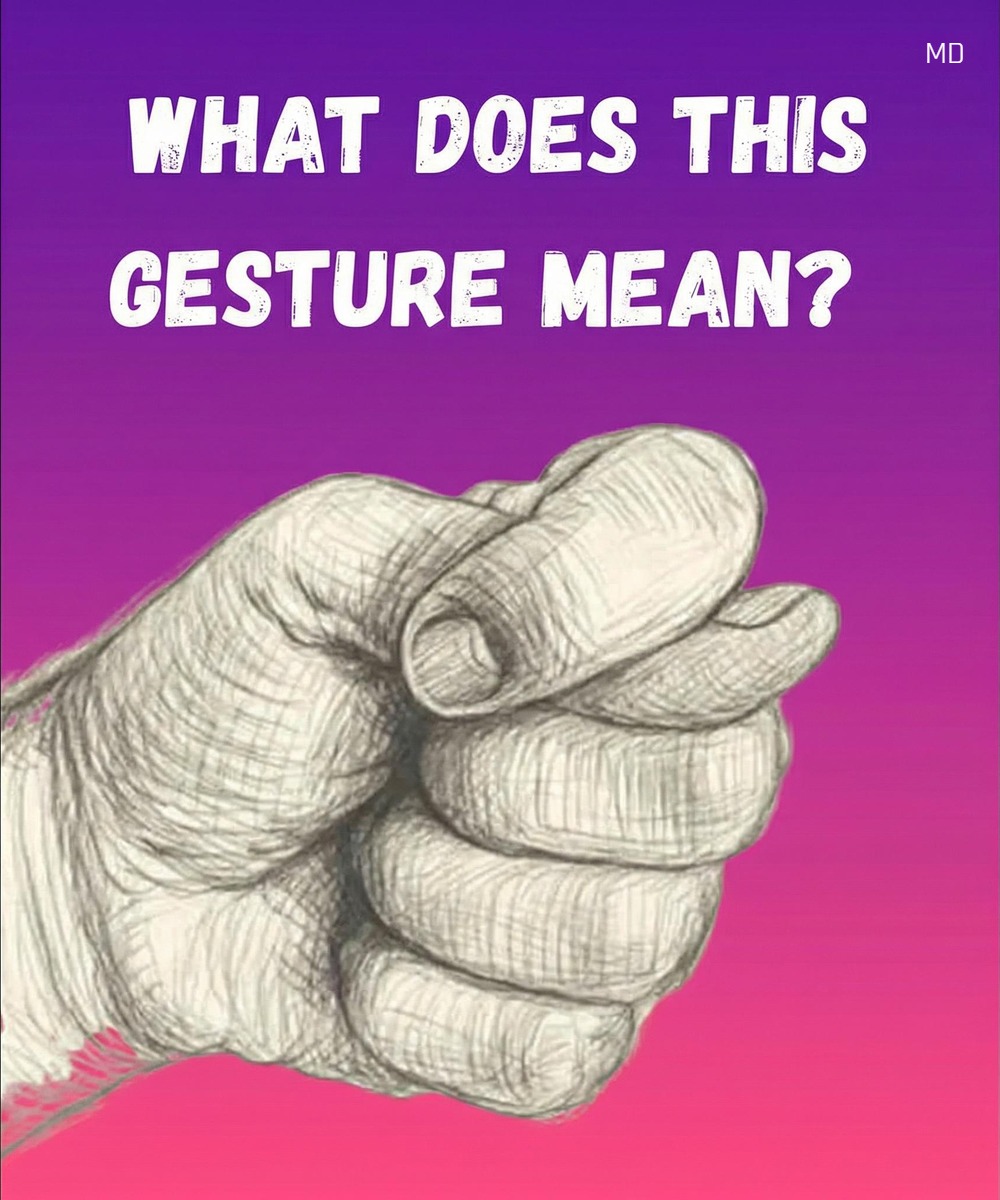
The human hand has long been a powerful means of communication, and few gestures are as old or culturally layered as the “fig” gesture—formed by placing the thumb between the index and middle fingers. Though simple in appearance, it has carried deep meaning across history.
In ancient Mediterranean cultures, the fig gesture (mano figa) was believed to ward off the evil eye, symbolizing fertility and life as a form of protection. During the Middle Ages, it evolved into a quiet act of social resistance, allowing people to refuse authority without risking open confrontation.
As the gesture spread, its meaning diverged. In Italy and Brazil, it became a good-luck charm, while in parts of Eastern Europe and Turkey it remained a mocking sign meaning “you get nothing.” Over time, it softened further, surviving in childhood games like “I’ve got your nose.”
Today, the fig gesture is largely absent from modern communication, replaced by words and screens. Yet its legacy endures as a reminder that strength doesn’t always need volume—sometimes, a small, silent gesture can carry remarkable power.