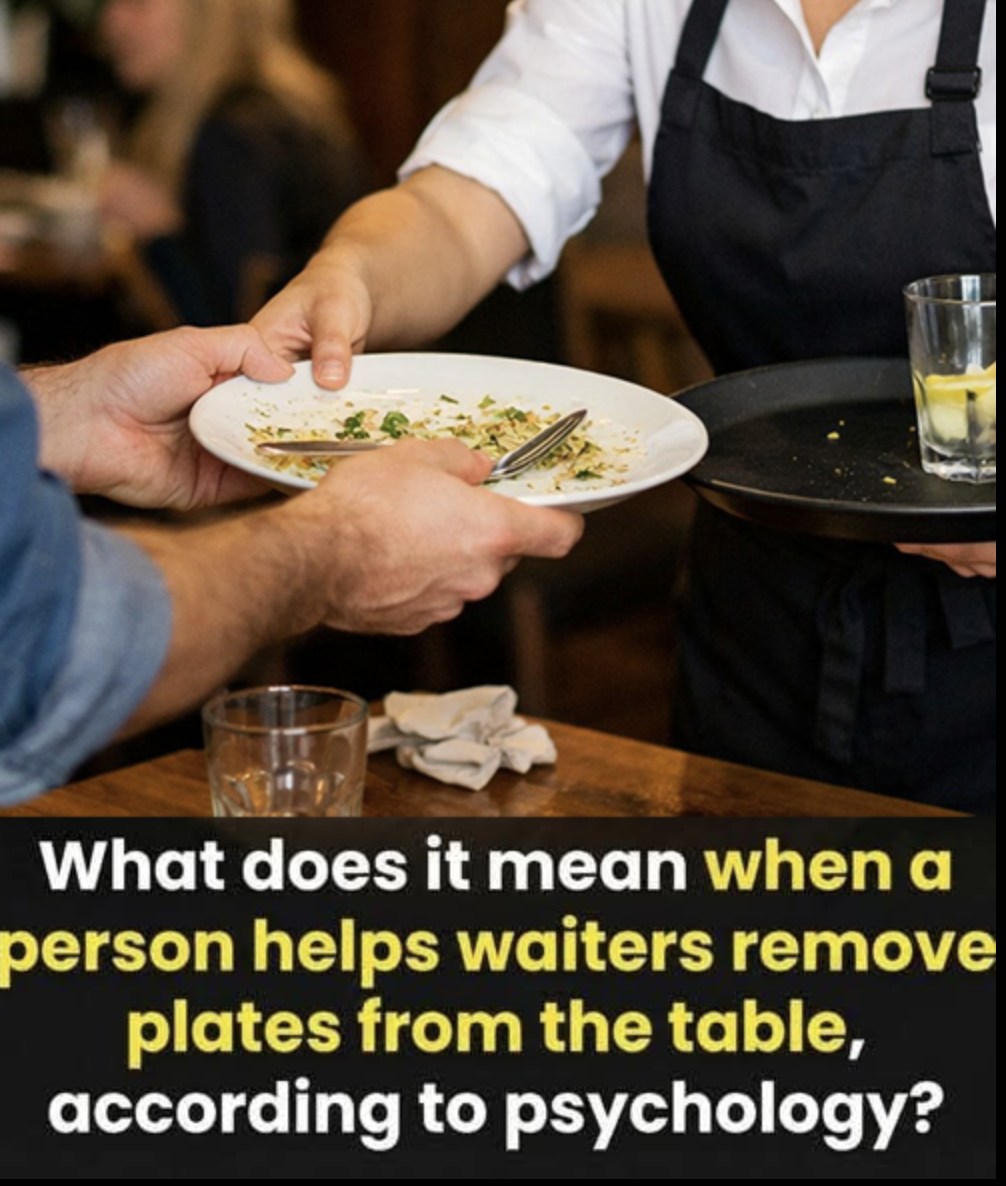
If you’ve ever stacked plates or gathered empty glasses at a restaurant before the server returns, that small habit may reveal more than good manners. Psychologists say it often reflects empathy, awareness, and a natural inclination to help others.
These quiet gestures—done without attention or expectation—are examples of prosocial behavior: small acts that ease another person’s load. Many who do this are former service workers who recognize the strain of long, demanding shifts. Others act simply because they’re attuned to their surroundings and notice when help is needed.
According to empathy researcher Dr. Martin L. Hoffman, such micro-acts of kindness show a genuine concern for improving someone else’s day. Though minor, they can have a meaningful impact, offering servers a moment of relief or gratitude amid a hectic environment.
While cultural norms differ, the underlying message is universal. Helping tidy a table isn’t about status or recognition—it’s about compassion. In a fast-paced, screen-driven world, these unprompted, human moments stand out as reminders that kindness still shows up in everyday places.