The Search for Certainty in an Uncertain World
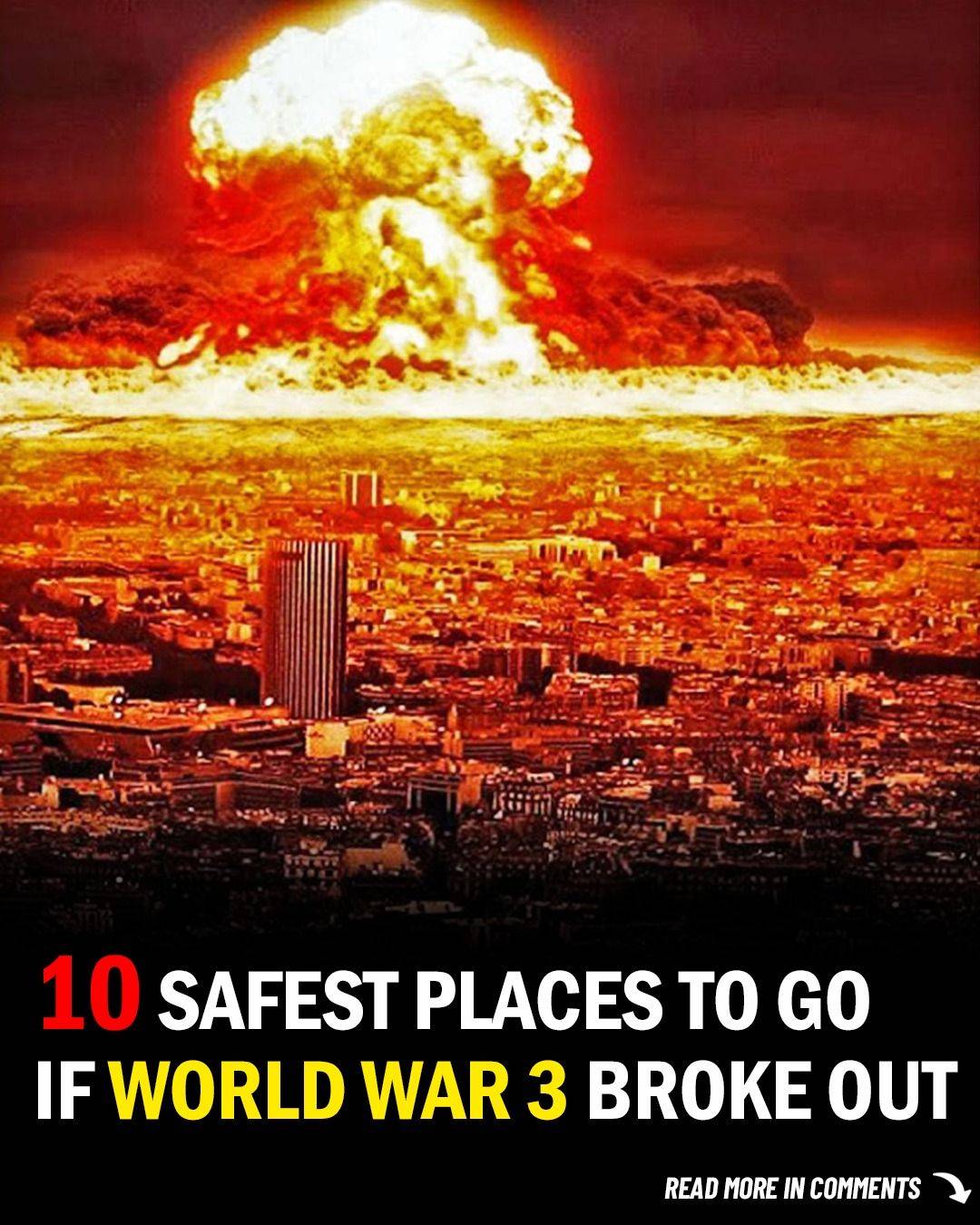
If the delicate threads of global diplomacy were ever to snap, leading to a large-scale international conflict, the human instinct for preservation would immediately turn toward the horizon. In the shadow of a hypothetical World War III, the definition of “home” would shift from convenience and career to survival and seclusion. The ideal sanctuary isn’t just a dot on a map; it is a complex intersection of geographic isolation, resource independence, and a long-standing cultural commitment to staying out of other people’s fights.
The most secure regions on our planet are those that offer nothing to a conqueror but everything to a survivor. These are places far removed from the high-value targets of military intelligence—cities that serve as the nervous systems of global finance or the heartbeats of political power. To truly ride out a storm of global instability, one must look for lands that can feed their own people, power their own grids, and defend their borders using nothing but the sheer difficulty of their terrain.
While the concept of a “perfectly safe” place is a myth in a connected world, the following ten regions represent the best-positioned strongholds for those seeking to weather a global collapse.
1. The Southern Stronghold: New Zealand
New Zealand often tops the list of “prepper” destinations for a very good reason: it is a masterclass in isolation. Situated in the deep south of the Pacific Ocean, it is thousands of miles away from the flashpoints of the Northern Hemisphere. Its geopolitical strategy is one of quiet cooperation rather than aggressive alliance, making it a low-priority target for any warring faction.

The country’s true strength lies in its self-sufficiency. New Zealand is an agricultural powerhouse, producing far more food than its small population could ever consume. Furthermore, its energy grid is a marvel of green engineering, drawing the vast majority of its power from hydroelectric dams and geothermal vents. In a world where oil supplies might be cut off, New Zealand would keep the lights on and the tables full. It is a land of rolling hills and rugged mountains that offers not just safety, but a high quality of life even when the rest of the world is in turmoil.
2. The Alpine Vault: Switzerland
Switzerland is a country that has turned neutrality into a high art form. It has famously avoided being drawn into a major conflict for over two centuries, despite being nestled in the very heart of Europe. Its safety isn’t just a matter of policy; it is built into the literal bedrock of the nation. The Swiss Alps provide a natural fortress that would make any modern invasion a logistical nightmare.

What truly sets Switzerland apart, however, is its culture of preparedness. It is one of the only nations on Earth with enough nuclear fallout shelter capacity to house its entire population. Many of its mountain passes are rigged for demolition, and its bridges are designed to be dismantled at a moment’s notice. Combined with a highly localized agricultural system and a stable, decentralized government, Switzerland remains a gold standard for security in an unstable world.
3. The Isolated Hearth: Iceland
Iceland is a jagged, beautiful island in the North Atlantic that thrives on its own terms. It lacks a standing army and maintains a reputation for being one of the most peaceful nations in existence. Its strategic value in a nuclear or large-scale conventional war is minimal, meaning it is unlikely to be in anyone’s crosshairs.

Iceland’s greatest asset is its volcanic heart. The nation is 100% powered by renewable energy, utilizing geothermal heat to warm its homes and grow food in greenhouses even during the darkest winters. Because it is an island nation with a small, tight-knit population, it can manage its resources with incredible efficiency. While the climate can be harsh, the political and social climate is one of the safest on the planet.
4. The Great White Silent: Antarctica
While it is not a nation-state, Antarctica represents the ultimate extreme in geographic detachment. Regulated by the Antarctic Treaty, the continent is legally designated as a place of peace and scientific study, strictly prohibiting military activity of any kind. It has no permanent residents, no borders, and no political grievances.
In a scenario where the inhabited continents are engulfed in conflict, the research stations of Antarctica would be perhaps the most ignored places on Earth. However, survival here is a technical challenge. It requires sophisticated life-support systems and pre-stocked supplies. For those with the means to maintain a self-contained habitat, the frozen south offers a level of invisibility that no other place can match. It is the world’s quietest corner, protected by its own inhospitable nature.
5. The Breadbasket of the South: Argentina
Argentina is a land of vast contrasts and enormous natural wealth. Located at the southern tip of South America, it is shielded from the primary theaters of war by thousands of miles of ocean and the formidable barrier of the Andes Mountains. Argentina is one of the world’s premier food producers, with the fertile Pampas providing an endless supply of grain and livestock.
Energy independence is another feather in Argentina’s cap, as the country possesses significant oil and gas reserves. The southern region, Patagonia, is particularly attractive for those seeking seclusion. It is a sparsely populated wilderness of glaciers and forests where a community could disappear from the global stage entirely. In a conflict centered in the Northern Hemisphere, Argentina’s geography and resources make it a resilient haven.
6. The Emerald Outpost: Ireland
Ireland has long maintained a policy of military neutrality, choosing not to join NATO and keeping its defense forces focused primarily on peacekeeping. Its position on the western fringe of Europe puts it far away from the traditional invasion routes and primary military targets of the continent.
Beyond its politics, Ireland is a land of abundant water and fertile soil. Its economy is robust but not entirely dependent on the military-industrial complex of larger powers. The Irish people have a strong sense of community and a history of resilience. In the event of a global shutdown, the island’s ability to produce its own dairy, meat, and crops, combined with its lack of enemies, makes it a tranquil refuge.
7. The Vast Wilderness: Remote Canada
Canada is the second-largest country on Earth, and much of its interior remains a pristine, untouched wilderness. While Canada is a member of NATO, its sheer size is its greatest defense. The vast majority of the population lives near the southern border, leaving millions of square miles of forest, tundra, and lake country in the north virtually empty.
In these remote regions, the land provides everything necessary for long-term survival: fresh water, wood for fuel, and abundant wildlife. Areas like the Yukon or the interior of British Columbia are shielded by mountain ranges and are far removed from any potential missile paths or strategic targets. For those who know how to live off the land, the Canadian wilderness offers an endless expanse of safety.
8. The Pacific Sanctuaries: Tuvalu and the Island Chains
Tuvalu, along with neighboring nations like Kiribati and Samoa, represents the “forgotten” parts of the world—which is exactly what you want in a global war. These are small, peaceful island nations located in the vastness of the Pacific Ocean. They have no standing armies, no heavy industry, and no strategic significance to global superpowers.
Life on these islands is deeply rooted in local tradition, fishing, and small-scale farming. While they might face challenges regarding imported goods, their isolation acts as a powerful shield against the fallout of a world at war. They are the ultimate “off-the-grid” locations, where the chaos of the modern world feels like a distant, irrelevant memory.
9. The Kingdom of Clouds: Bhutan
Bhutan is a landlocked sanctuary nestled high in the Himalayas between the two most populous nations on Earth. Despite its location, Bhutan has remained remarkably insulated from global turmoil. It is a country that measures its success in “Gross National Happiness” rather than just economic output, leading to a society that is deeply harmonious and self-sufficient.

The terrain of Bhutan is its most effective defense; the high-altitude mountain passes are nearly impossible to navigate for an invading force. The country relies on traditional agriculture and has a strong cultural emphasis on environmental conservation. It is not part of any major military blocks, and its focus on internal peace makes it an unlikely participant in any global struggle.
10. The Coastal Frontier: Chile
Chile is a long, narrow ribbon of land tucked between the towering peaks of the Andes and the expanse of the Pacific. This unique geography makes it a natural fortress. Like its neighbor Argentina, Chile is far removed from the primary conflict zones of the North. It is a politically stable nation with a diverse climate that allows for the production of a wide variety of food.

The southern reaches of Chile, including the fjords of Tierra del Fuego, are some of the most remote inhabited places on the planet. These areas are self-reliant in terms of water and basic resources. For anyone looking to escape a global escalation, Chile offers the rare combination of modern infrastructure and extreme geographic isolation.
The Anatomy of a Safe Haven
What truly defines a sanctuary when the world is at its most volatile? It isn’t just a lack of bombs; it’s a presence of life-sustaining essentials. To evaluate a location’s safety, one must look for these four pillars:
- Strategic Irrelevance: Being a place that no one wants to conquer or destroy.
- Resource Autonomy: The ability to produce food, clean water, and power without outside help.
- Natural Barriers: Mountains, oceans, or vast distances that make military movement impossible.
- Social Stability: A population that remains cohesive and peaceful even under external pressure.
Closing Perspectives
While the hope remains that the modern world is too interconnected to fall into the trap of a third global conflict, wisdom lies in understanding the terrain. History teaches us that peace is a garden that requires constant tending, and sometimes, the storm comes regardless of our efforts. The regions listed above are not just vacation spots; they are the world’s lifeboats. By focusing on isolation, neutrality, and sustainability, these nations offer a blueprint for survival in an age of uncertainty.