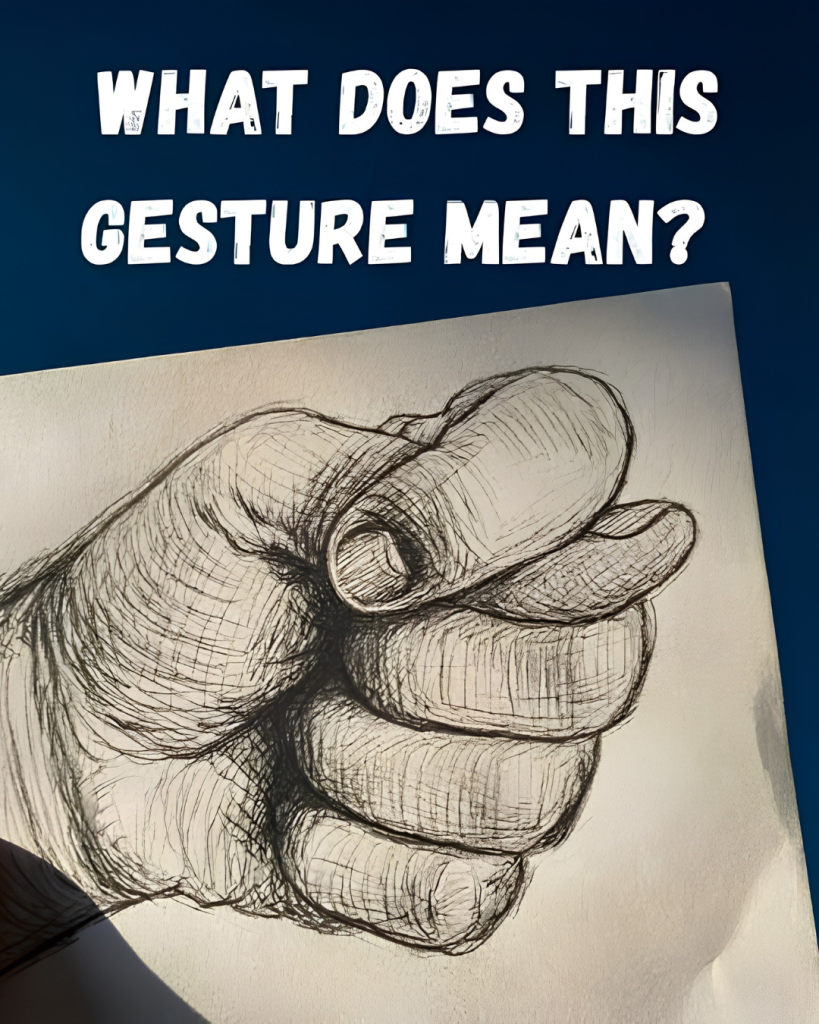

The human hand has always been a powerful tool of communication, long before words or digital symbols existed. One of the most fascinating gestures in history is the “fig” gesture—made by tucking the thumb between the index and middle fingers inside a clenched fist. Though simple in appearance, it carried deep meanings across Europe and the Mediterranean.
In the 19th century, when speaking openly against authority could be dangerous, the gesture became a subtle sign of defiance. People used it to quietly refuse demands or express resistance without saying a word. It allowed ordinary people to stand their ground while avoiding direct conflict.
The gesture also held spiritual meaning. In many cultures, it was believed to protect against bad luck and the “evil eye.” Parents often taught children to make the sign as a form of protection, turning a small hand movement into a symbol of safety and strength.
Over time, the fig gesture became part of family life as well. Grandparents used it playfully with children, softening its rebellious meaning into a gesture of humor and affection. In emotional moments, it could also symbolize resilience and silent support between loved ones.
Today, gestures like the fig are fading in the digital age, replaced by emojis and text messages. But its history reminds us that communication once relied on subtle expressions, physical presence, and shared understanding.
More than just a hand sign, the fig gesture represented protection, quiet resistance, and human resilience. It showed that sometimes the strongest messages are the ones spoken without words.